
Fuel Control on a Quarry: Where the Diesel Goes and How to Stop It
- Автор
- Inesa Leonidivna
- Дата
- 4 July 2026
- Час читання
- 5 min read
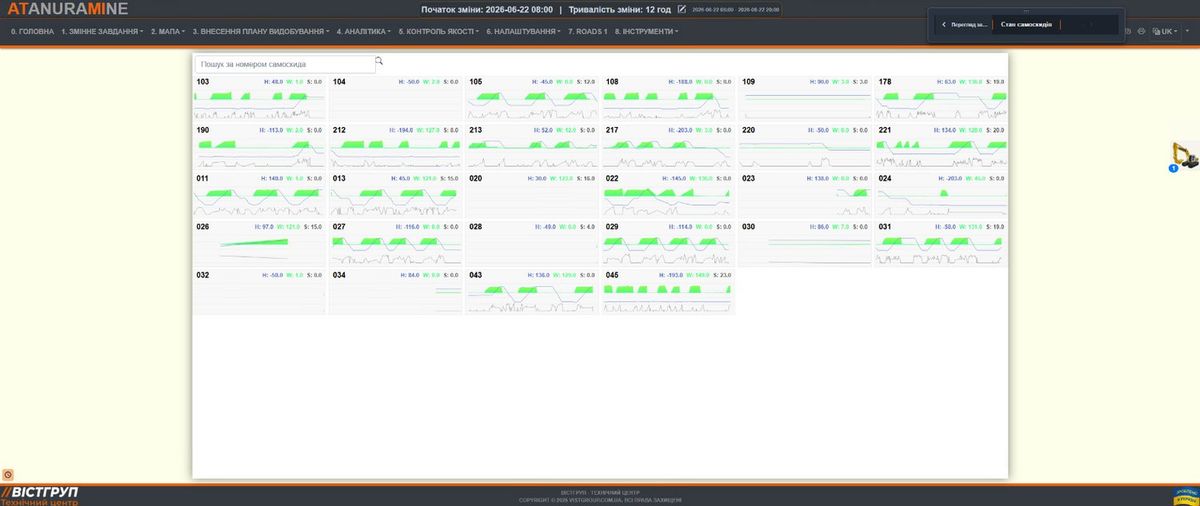
Fuel can be a third of haulage cost on a quarry. It is also the worst-controlled cost line: write-offs "by the norm", refuellings recorded from the driver's words, drains nobody can prove.
We have been installing fuel control systems for over twenty years, and the starting picture repeats itself from site to site almost word for word.
Where it goes
The classic: a drain from the tank while parked, plus a short pour at the fuel station. Without an in-tank sensor there is nothing to prove — the log says one thing, the tank holds another, there are no witnesses.
Second by volume is idling. The engine runs for hours: "keeping warm" in winter, "for the AC" in summer. Diesel burns, trips stay at zero.
And third, the one rarely said out loud: inflated engine hours and trip counts, against which fuel is written off perfectly legally — by the norm.
What goes on the machine
A capacitive fuel level sensor is fitted into the tank. Large tanks get two, because the machine works on grades and fuel sloshes. The sensor feeds the onboard terminal, which logs the level continuously and matches it against location, time and operating mode.
Then everything shows up in reports. A refuelling is the litres actually poured, not the litres on the receipt. A sharp level drop while parked triggers an alert the same minute. Consumption is counted per engine-hour and per tonne-kilometre, not "fleet average".
What to expect from the numbers
On our deployments fuel costs drop 10–15% within the first months. The biggest effect comes not from punishing anyone but from transparency itself: drains stop quietly on their own once people know the tank is being watched.
A bonus: those same sensors and terminals are half of a full dispatching system. If you grow into one later, you will not buy the hardware twice.
We match sensors to specific tanks, calibrate them on site, integrate with the ATANURA dispatching platform and teach your people to read the reports. The hard part is usually not the technology — it is being ready to see the real numbers.